
Leaf Guard vs. Gutter Guards: Choosing the Right Gutter Installation North Okanagan for Your Vernon Home
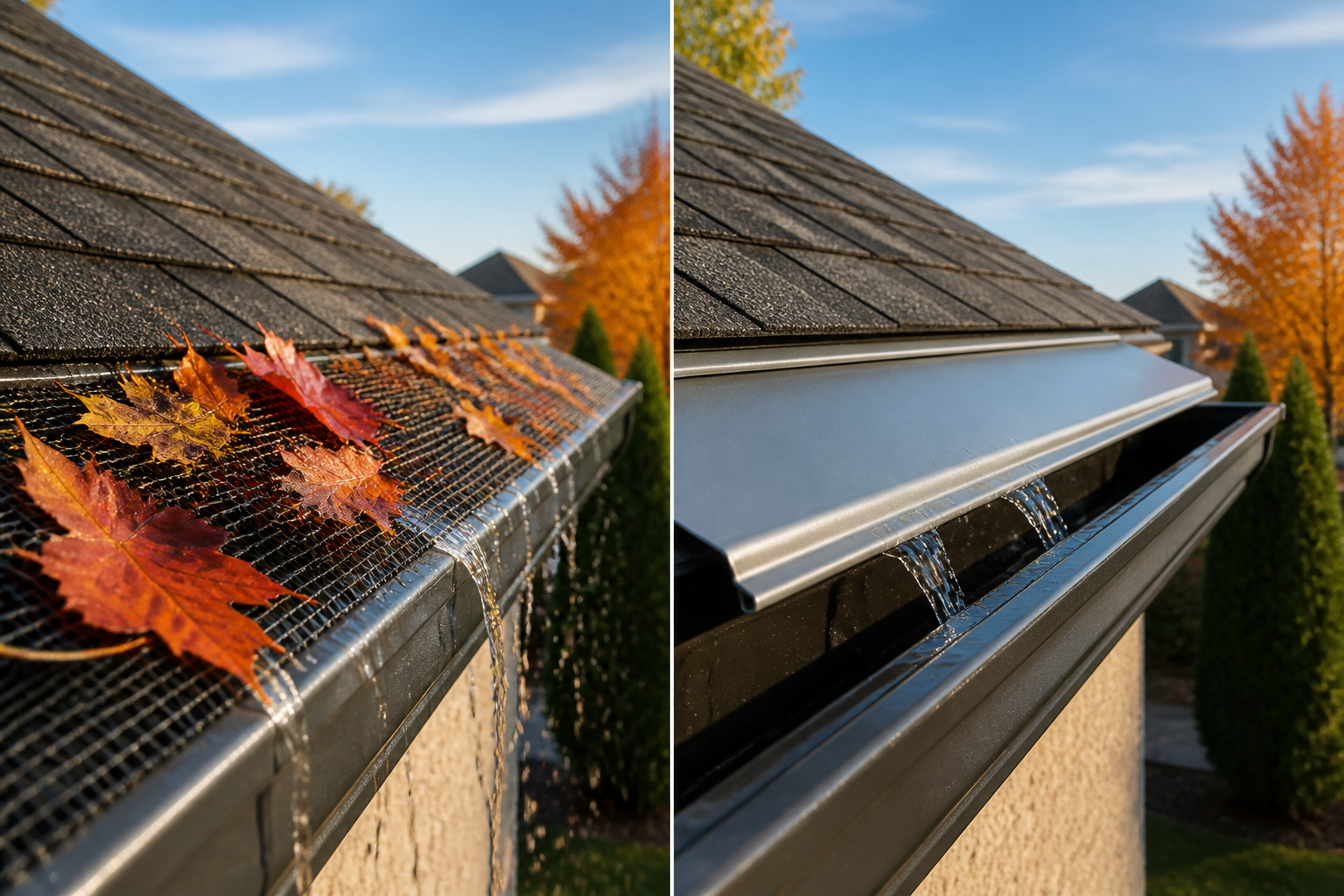
If you own a home in the North Okanagan, you already know how quickly fallen leaves, pine needles, and debris can clog your gutters — especially with all the mature trees around Vernon, Coldstream, and Lake Country. When it comes time for gutter installation North Okanagan homeowners trust, one of the biggest decisions you’ll face is choosing between leaf guards and gutter guards. Both promise to keep debris out and water flowing, but they work differently and suit different homes. Let’s break down what each option really offers so you can make the right call for your property.
Why Gutter Protection Matters in Vernon’s Climate
Vernon’s mix of heavy fall leaf drop, winter snow, and spring rain puts real stress on your gutter system. Clogged gutters don’t just look bad — they can lead to:
- Water pooling and overflowing near your foundation
- Ice dams forming during cold snaps
- Roof fascia and soffit rot
- Basement or crawlspace moisture issues
- Pests and mold making a home in soggy debris
Without proper protection, most homeowners end up cleaning their gutters two or more times a year — a task that’s time-consuming and, frankly, a little dangerous on a ladder. That’s why so many local homeowners pair new gutter installation with some form of debris protection from the start.
What Are Leaf Guards?
Leaf guards are typically solid or micro-mesh covers that sit on top of your existing gutters, allowing water to flow in while blocking larger debris like leaves and twigs from entering.
How Leaf Guards Work
Most leaf guard systems use a curved or angled design so rainwater clings to the surface and drips into the gutter, while leaves slide off the edge and fall to the ground. Some use fine mesh screens instead, physically filtering out debris.
Pros of Leaf Guards
- Great at blocking large leaves, especially from deciduous trees common around Vernon
- Reduce (but don’t always eliminate) the need for gutter cleaning
- Many styles blend in visually with the roofline
- Can be installed on existing gutter systems in many cases
Cons of Leaf Guards
- Smaller debris like pine needles and seed pods can still get through
- Some designs struggle with heavy snow load or ice buildup
- Lower-end products may sag or warp over time
What Are Gutter Guards?
“Gutter guards” is a broader category that includes several protection types: mesh screens, reverse-curve guards, foam inserts, and brush-style guards. In general conversation, the term is often used interchangeably with leaf guards, but true gutter guard systems tend to offer a wider range of materials and filtration levels.
Types of Gutter Guards to Know
- Micro-mesh guards – Fine stainless steel mesh that blocks even small particles like grit and pine needles
- Reverse-curve guards – Use surface tension to direct water down while debris falls away
- Foam inserts – Affordable but can trap fine debris and degrade faster
- Brush guards – Bristled inserts that catch larger debris but require periodic maintenance
Pros of Gutter Guards
- More filtration options to match your specific tree coverage and roof type
- Micro-mesh versions handle fine debris better than most leaf guards
- Durable options (aluminum or stainless steel) can last as long as the gutters themselves
- Better long-term performance in heavy tree-cover areas like parts of Vernon and Coldstream
Cons of Gutter Guards
- Higher upfront cost for premium micro-mesh systems
- Some styles require professional installation for proper fit
- Not all guards perform equally well with heavy snow or ice
Which Option Is Best for Vernon Homes?
Vernon’s landscape is a mix of deciduous trees, pines, and evergreens, which means many homes deal with both large leaves and fine debris like needles. Here’s how to think about it:
- If your property has mostly maple, birch, or other broad-leaf trees, a quality leaf guard may be enough to keep gutters clear.
- If you’re surrounded by pines, cedars, or a mix of tree types (common throughout the North Okanagan), a micro-mesh gutter guard will offer more complete, long-term protection.
- If you’re planning a new gutter installation North Okanagan wide, it’s worth adding guards at the same time — retrofitting later often costs more and can void certain warranties.
A Note on Snow and Ice
Because Vernon winters bring freeze-thaw cycles, choose a guard system rated for snow load and designed to prevent ice dam formation. Not every product on the market is built for our climate, so this is one area where local experience really matters.
Tips for Choosing the Right Gutter Protection
- Assess your tree coverage – Walk your property and note what’s actually falling into your gutters throughout the year, not just in autumn.
- Check material quality – Aluminum and stainless steel outlast vinyl and foam in our climate.
- Ask about warranty coverage – A solid warranty signals confidence in the product’s durability.
- Get a professional installation – Poorly fitted guards can actually trap more debris than they block.
- Bundle with new gutters when possible – Installing guards during a full gutter installation ensures proper fit and often saves money long-term.
Both leaf guards and gutter guards can significantly cut down on maintenance and protect your home from water damage — the right choice really comes down to your property’s tree coverage, budget, and how hands-off you want to be. For most Vernon homes surrounded by a mix of trees, a durable micro-mesh gutter guard tends to offer the best long-term value, while simpler leaf guards can work well for lower-debris properties.
If you’re weighing your options or planning a project, the team behind Heimann Gutters can walk you through the best system for your home and handle everything from consultation to installation. Reach out today to get a free assessment and find the right fit for your Vernon property before the next leaf season hits.