
What Causes Ice Dams on Gutters in Winter — and How Okanagan Homeowners Can Prevent Them
If you’ve noticed a thick ridge of ice building up along the edge of your roof after a cold snap in Vernon, you’ve seen an ice dam up close. For many North Okanagan homeowners, ice dams gutters Okanagan winters produce are a familiar winter headache — but understanding what causes them is the first step to keeping your gutters and home protected.
What Is an Ice Dam? (And Why Should You Care?)
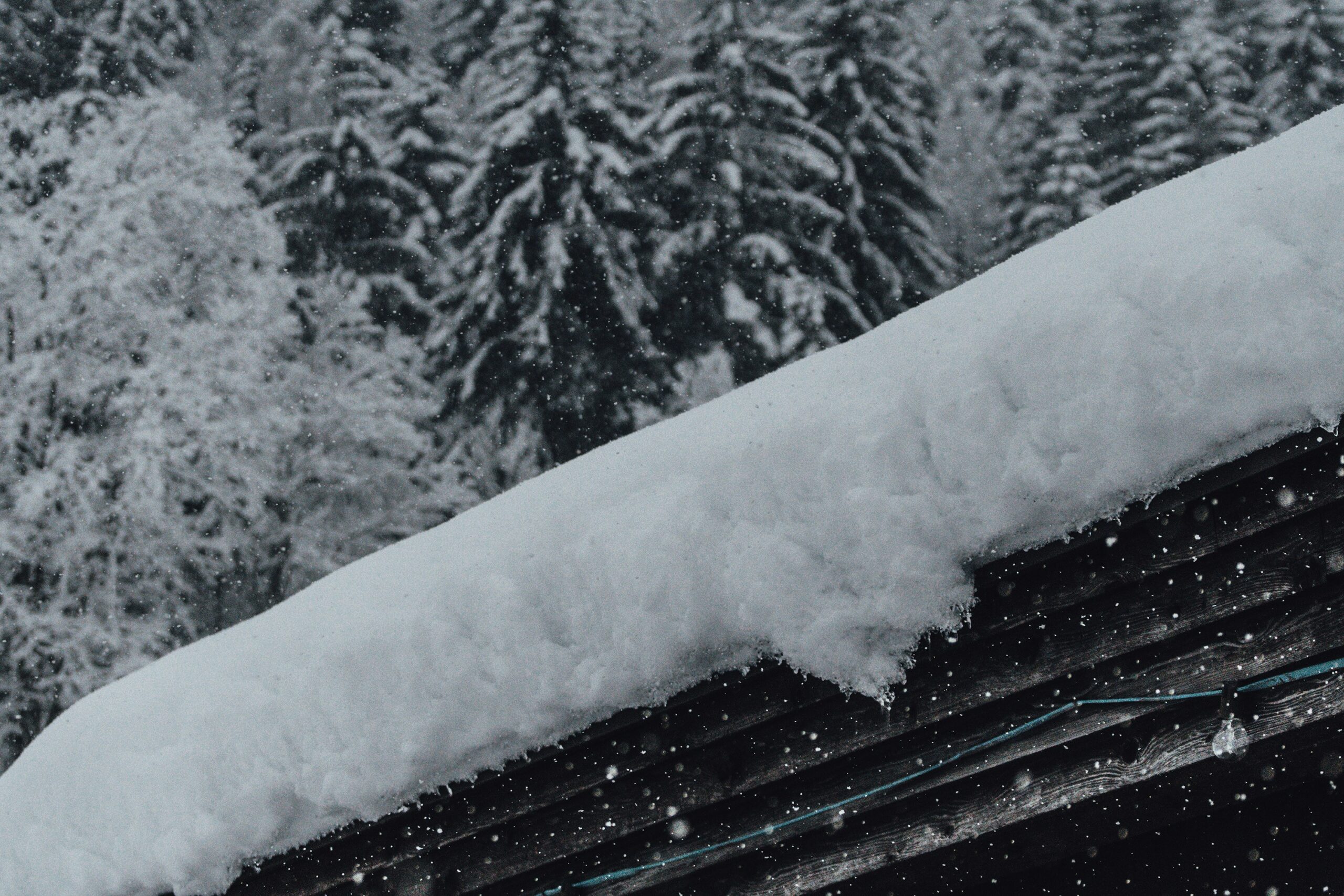
An ice dam is a ridge of ice that forms along the lower edge of your roof — at the eaves or inside the gutter — blocking meltwater from draining properly. As water backs up, it seeps under shingles, soaks into roof decking, and pools against your fascia boards.
The damage isn’t always obvious at first — a water stain on a ceiling, a gutter pulling away from the house. Left unaddressed over multiple winters, ice dams can cause rotted fascia, compromised insulation, and gutters that need full replacement. A small amount of roofline ice is normal in the Okanagan, but a growing dam that’s trapping water is worth taking seriously.
The Science Behind Ice Dams — Explained Simply
Ice dams aren’t caused by cold alone. They’re caused by a temperature imbalance on your roof.
Why the Roof-to-Eave Temperature Difference Is the Real Culprit
Heat escaping from your home warms the attic, which warms the roof deck. Snow on the upper roof begins to melt — even when outside temperatures are below zero. That meltwater flows toward the eaves, where the roof is no longer warmed from below, and refreezes. Over time, that ice builds into a dam. The problem isn’t winter itself — it’s the temperature gap between a warm upper roof and a cold lower edge.
How Water Gets Trapped — and Where the Damage Happens
Once a dam forms, meltwater pools behind it with nowhere to go, finding any gap or unsealed joint in the structure. Common damage points include directly behind the eavestrough, at the roof-to-wall junction, and around vents or chimneys. By the time you see a ceiling stain, water has usually been sitting in your wall assembly for some time.
Why the Okanagan Climate Makes Ice Dams Especially Common
The Okanagan isn’t the coldest region in BC — and that’s actually part of the problem. Our winters are defined by constant temperature fluctuation, which creates near-perfect conditions for ice dam formation.
The Freeze-Thaw Cycle in Vernon and the Okanagan
In Vernon and across the North Okanagan, temperatures can climb above zero on a January afternoon and drop to -10°C overnight. That daily swing puts your roof through repeated melt-and-refreeze cycles all winter long. A consistently cold climate actually gives ice dams less opportunity to grow — there’s no daytime melt to feed them. Our climate doesn’t give us that advantage.
Warm Days, Cold Nights, and Heavy Snowfall Events
The most damaging scenarios follow a familiar pattern: heavy snowfall, a warm spell above freezing, then a hard overnight freeze. The snowpack melts aggressively during the day — then that water freezes solid at the eave line after dark. Repeat that three or four times and you can build a serious ice dam in a matter of days.
Elevation and Microclimates Across the Region
The Okanagan isn’t uniform. Homes above Vernon, in Coldstream, or the BX area experience sharper temperature swings than valley-bottom properties. Higher elevation means more snow accumulation and steeper overnight drops — both of which increase ice dam risk considerably.
How Proper Gutter Installation Prevents Ice Dams
Your gutters can’t stop ice dams on their own — attic insulation and ventilation matter too — but a correctly installed gutter system is one of the most effective tools for managing meltwater before it becomes a problem.
Gutter Pitch — Why Slope Matters More Than You Think
Gutters need to be installed at the right pitch to drain efficiently — roughly 1/16 of an inch of drop per linear foot toward the downspout. Gutters that are level or pitched the wrong direction allow standing water to pool, and standing water in an Okanagan winter will freeze. Getting the pitch right is the foundation of a system that actually works in our climate.
Gutter Placement Relative to the Roof Edge
Where the gutter sits in relation to your roof edge matters just as much as slope. Gutters hung too high interfere with snow sliding off the roof and can accelerate ice buildup. Gutters hung too low miss a portion of the runoff entirely, letting water drip behind the system and saturate the fascia. Proper placement is a calibrated decision based on your roof pitch, overhang length, and typical snow load.
Material Choices That Hold Up to Okanagan Winters
Vinyl gutters become brittle in sustained cold and are more likely to crack under the weight of ice. Aluminum is the standard choice in the North Okanagan — lightweight, corrosion-resistant, and reliable through freeze-thaw cycling. Seamless aluminum eavestrough is particularly effective because it eliminates the sectional joints where leaks tend to develop under ice pressure.
Snow Stops — What They Are and When You Need Them
Snow stops (also called snow guards) are devices mounted on the roof that hold snow in place, letting it melt gradually rather than releasing all at once.
Metal Roofs and Steep Pitches — The Highest Risk Scenarios
Metal roofs are extremely slippery — a full winter’s snowpack can release without warning, sending hundreds of pounds of snow and ice crashing into your gutters and tearing an eavestrough clean off the fascia. Snow stops distribute the load and let snow shed slowly, protecting your gutters and anyone standing below.
Snow Stops vs. Heat Cables — Understanding Your Options
Snow stops are passive — no energy or maintenance required. Heat cables actively warm the roof edge and gutter to prevent refreezing, and can be effective for severe or recurring problem spots, but they add to energy costs. For most Okanagan homes, snow stops are the more practical starting point, and both systems can be combined when needed.
When to Call a Professional vs. Handle It Yourself
Not every ice dam situation requires a phone call. Knowing where the line is can save you from a costly — or dangerous — mistake.
Safe DIY Steps Homeowners Can Take
A roof rake lets you pull snow off the lower roof from the ground, reducing the snowpack before it can melt and refreeze. Keeping downspouts clear through fall so water drains freely is another simple win. Checking attic insulation for gaps or blocked vents addresses the root cause — the heat loss that feeds ice dam formation in the first place.
Signs It’s Time to Call a Gutter Professional
Call a professional if you’re seeing an ice dam more than a few inches thick, water stains on ceilings or walls, gutters sagging or separating from the fascia, or if this is the second or third winter with the same issue. Chipping ice off gutters yourself risks damaging the system — and puts you on a ladder in winter conditions. A gutter contractor can assess whether your installation is contributing to the problem.
Frequently Asked Questions About Ice Dams in the Okanagan
Can ice dams damage my gutters permanently?
Yes. Repeated ice dam cycles bend aluminum out of shape, pull fasteners from the fascia, and cause sectional gutters to separate at the joints. Once deformed by ice load, a gutter rarely drains correctly again. Addressing the underlying causes early is almost always less expensive than a full eavestrough replacement.
Does gutter cleaning in the fall help prevent ice dams?
It helps, but it’s not the whole picture. Clean gutters allow meltwater to drain freely rather than pool and refreeze — so fall cleaning is genuinely worthwhile. But if your gutters are incorrectly pitched or your attic is poorly insulated, clean gutters alone won’t stop ice dams. Think of it as one layer of a complete prevention strategy.
Are ice dams covered by home insurance in BC?
It depends on your policy. Some BC insurers cover sudden water damage caused by ice dams; others treat it as a maintenance issue and exclude it. Review your policy and contact your provider directly — and document any damage with photos as soon as you notice it.
Protect Your Home This Winter with the Right Gutter System
Ice dams are a real winter risk for Okanagan homeowners, but they’re largely preventable with the right combination of attic insulation, roof ventilation, and a properly installed gutter system. Most of the ice dam problems we see in Vernon come down to gutters with the wrong pitch, poor placement, or materials that weren’t suited to our freeze-thaw conditions. If your gutters are aging or you’ve dealt with recurring ice buildup, it’s worth having a professional assess the system before snow arrives.
Properly pitched and installed gutters are your first line of defence against ice dams. Learn more about professional eavestrough and gutter installation in Vernon that’s designed for BC winters.